
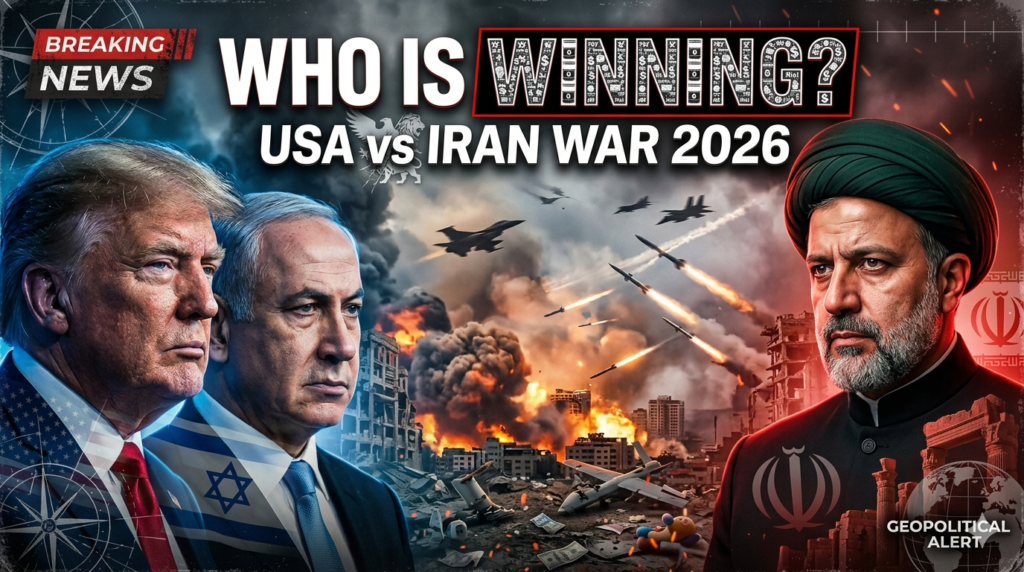
The USA vs Iran war (2026) has rapidly evolved into a complex global conflict. While the United States started with overwhelming military strikes, the situation on the ground is becoming more complicated.
What looks like a straightforward military advantage is now turning into a long, expensive, and strategically difficult war for the U.S., while Iran is adapting and pushing back in unexpected ways.
What Started the USA-Iran War?
The conflict escalated in February 2026, when the United States and its allies launched massive airstrikes on Iran under a large-scale operation. These strikes targeted nuclear facilities, military bases, and leadership positions. (Encyclopedia Britannica)
Iran responded with:
- Missile attacks across the Middle East
- Drone warfare targeting U.S. bases
- Disruption of oil routes like the Strait of Hormuz
This quickly turned into a multi-region conflict, affecting global trade and energy supply.
Latest War Updates (April 2026)
- Iran has launched drone strikes on key oil infrastructure in the region
- Reports suggest Iran may have downed advanced U.S. fighter jets (The Guardian)
- The Strait of Hormuz remains under threat, disrupting global oil supply
- The U.S. continues targeting Iranian infrastructure, increasing escalation (Reuters)
- Oil trade routes are shifting, with shipments being redirected toward countries like China (The Times of India)
The war is no longer just military—it is now economic and strategic warfare.
Why Are USA and Iran Fighting?
- Nuclear program tensions
- Control over Middle East influence
- Long-standing geopolitical rivalry
These issues have existed for decades, but the current war has taken them to a new level.
Gujju Traders Insights: Is Iran Actually Winning?
At first glance, the United States looks stronger. But war is not only about power—it’s about pressure, cost, and sustainability.
Iran’s Smart War Strategy (Game Changer)
Iran is not fighting a traditional war. Instead, it is using smart and indirect tactics:
1. Economic Warfare (Oil Control)
- Iran is threatening and partially controlling the Strait of Hormuz
- This is pushing global oil prices higher
- Even indirect disruption is hurting global economies
Impact:
The U.S. is facing global pressure from rising fuel prices and economic instability
2. Drone and Missile Warfare
Iran is using:
- Low-cost drones
- Precision missile attacks
- Multi-country targeting strategy
These attacks are:
- Cheap for Iran
- Expensive to defend for the U.S.
Impact:
The U.S. is spending heavily just to defend and maintain control
3. Expanding the War Region
Iran is not limiting the war to its own borders:
- Attacks across Gulf countries
- Targeting oil refineries and U.S. bases
- Creating instability across multiple regions
Impact:
The U.S. is forced to spread its military resources thin
4. Time-Based Strategy
Iran’s biggest strength is patience.
Instead of quick victory, Iran is aiming to:
- Prolong the war
- Increase U.S. costs
- Create political pressure inside America
Impact:
Long wars historically weaken even powerful countries.
China and Russia: The Hidden Power Behind Iran
Iran is not fighting alone.
Russia’s Role
- Providing intelligence on U.S. military movements
- Sharing satellite data and strategic insights
- Supporting Iran’s defense systems
This helps Iran:
- Track U.S. aircraft and ships
- Improve targeting accuracy
China’s Role
- Major buyer of Iranian oil
- Providing technological and logistical support
- Blocking strong action against Iran in global forums
China is also:
- Ensuring Iran’s economy does not collapse
- Keeping trade routes active
Strategic Impact
China and Russia are not directly fighting, but:
- They are keeping Iran strong enough to continue the war
- They are indirectly increasing pressure on the United States
- They benefit from a prolonged conflict that weakens U.S. dominance
Who Is Winning Right Now?
United States (Under Pressure)
Strengths:
- Military dominance
- Advanced technology
Weaknesses:
- High war costs
- Global criticism
- Economic pressure from oil prices
- No clear quick victory
Iran (Strategic Advantage Growing)
Strengths:
- Smart war tactics
- Lower-cost warfare
- Strong backing from China and Russia
- Ability to disrupt global economy
Weaknesses:
- Infrastructure damage
- Economic sanctions
Final Verdict: Shift in Momentum
Short-Term Military Winner: United States
Strategic & Long-Term Position: Iran is gaining advantage
Reason:
Iran is successfully turning the war into:
- A costly conflict
- A global economic problem
- A long-term pressure game
Global Impact of the War
- Oil prices rising globally
- Stock markets becoming unstable
- Trade routes disrupted
- Risk of wider war increasing
What It Means for India
- Higher fuel prices
- Increased import costs
- Market volatility
- Pressure on traders and businesses
For Indian traders, this war is not far away—it is directly affecting profits and costs.
What Happens Next?
Three possible scenarios:
- Diplomatic negotiations
- Long-term war of attrition
- Expansion into a larger global conflict
Final Thoughts
The USA vs Iran war 2026 is no longer just about military strength.
It has become a battle of economics, strategy, and endurance.
Iran may not win in a direct fight—but it is successfully:
- Increasing U.S. pressure
- Expanding the conflict
- Changing the global power balance
“In modern warfare, the winner is not the strongest—but the one who can survive the longest.