
SECTOR IN-DEPTH // INDIA SEMICONDUCTOR MISSION & CAPITAL MARKETS
•
Published: November 24, 2026
•
Reading Time: 11 min
•
Long-Term Wealth 2027–2030
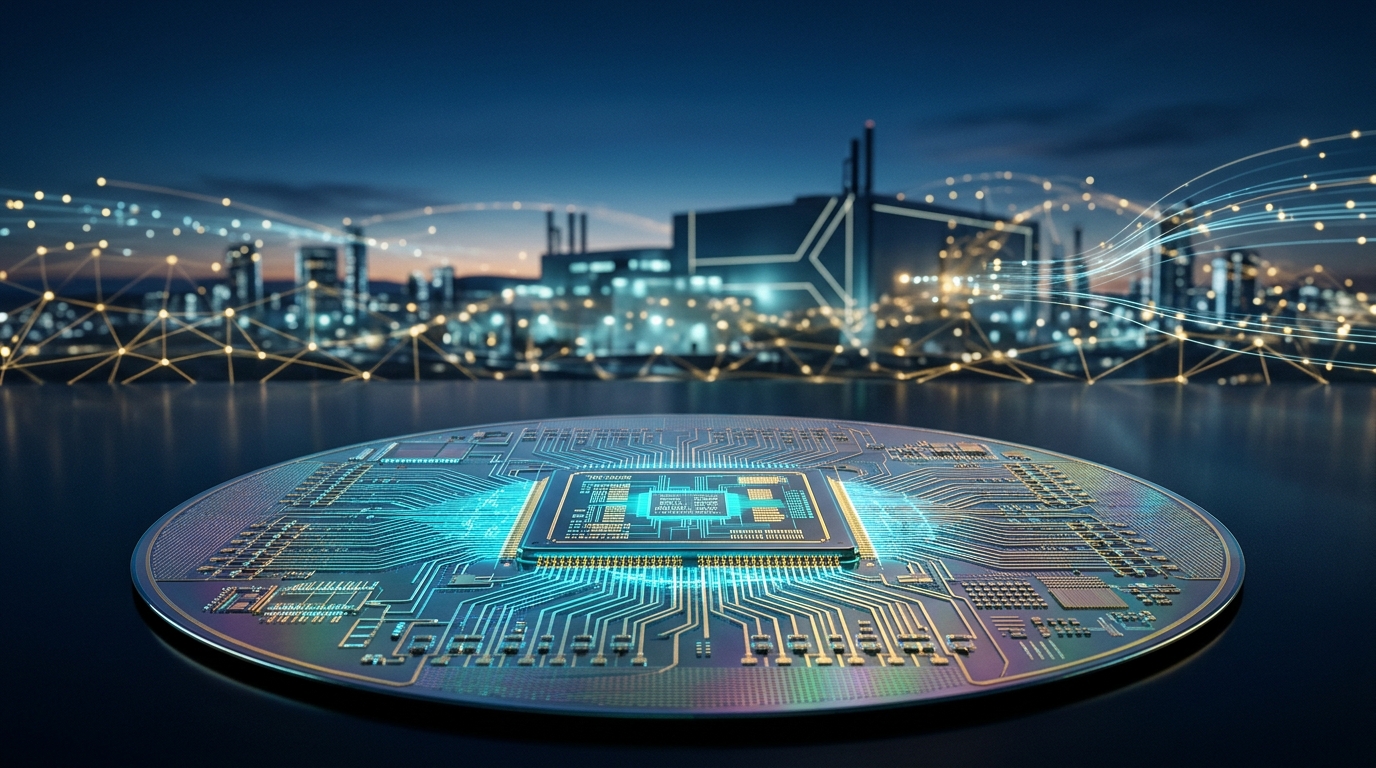
From the massive ₹91,000 Crore Tata-PSMC Giga Fab breaking ground in Dholera to state-of-the-art OSAT units lining Sanand, Gujarat has emerged as the silicon nerve center of India. As investors identify the top semiconductor stocks in India, the ₹76,000 Crore India Semiconductor Mission (ISM) transforms from policy blueprint into live cleanroom production, here is the institutional investor’s definitive investor roadmap to the top semiconductor stocks in India positioned to capture explosive earnings growth between 2027 and 2030.
Key Takeaways for Investors
- The 70–75% Subsidy Cushion: Under ISM 1.0 & 2.0 and the Gujarat Semiconductor Policy, approved chip projects receive up to 50% fiscal capital support from the Center and 20–25% from the State, compressing typical 10-year capex payback cycles down to 4–5 years.
- The Real Monetization Timeline: 2025–2026 is strictly the equipment installation and customer trial phase. Institutional revenue re-ratings and commercial scale will trigger between 2027 and 2030.
- Tier-1 Direct Packaging Leader: CG Power & Industrial Solutions (Murugappa Group) in joint venture with Japan’s Renesas represents India’s most direct, de-risked OSAT play with guaranteed captive automotive demand.
- EMS-to-Semiconductor Expansion: Kaynes Technology is moving up the value chain from printed circuit boards to advanced semiconductor packaging (Sanand unit), capturing higher gross margins.
- High-Margin Asset-Light Silicon Design: MosChip Technologies and Tata Elxsi offer exposure to chip design, ASIC engineering, and RISC-V architectures without the multi-billion-dollar depreciation burden of physical fabs.
- The ₹76,000 Crore India Semiconductor Mission (ISM) Decoded
- The Dholera & Sanand Silicon Corridor: Why Gujarat Leads
- The 4-Tier Semiconductor Value Chain for Indian Investors
- Top Semiconductor Stocks in India to Buy for 2027–2030
- Financial & Valuation Matrix (SOTP & Capex Breakdown)
- Key Investment Risks & Bottlenecks to Monitor
- Strategic Portfolio Allocation: Core vs. Satellite Alpha
- Frequently Asked Questions (FAQ)
1. The ₹76,000 Crore India Semiconductor Mission (ISM) Decoded
For decades, India’s technological prowess was celebrated for its software services while remaining almost 100% dependent on imported hardware. Today, India consumes over $38 Billion in semiconductors annually—a figure projected by the Ministry of Electronics and Information Technology (MeitY) and Counterpoint Research to skyrocket past $100 to $110 Billion by 2030.
Similar to the domestic manufacturing and PSU infrastructure push analyzed in our Mahanadi Coalfields IPO analysis, semiconductors have transcended simple electronics: they are the critical foundation of modern automotive manufacturing (EVs require over 3,000 chips per vehicle), defense avionics, solar inverters, telecommunication base stations, and high-performance AI data centers. To break the geopolitical vulnerability of global supply chains, the Government of India launched the landmark ₹76,000 Crore ($10 Billion) India Semiconductor Mission (ISM). According to verified project circulars published on the India Semiconductor Mission (ISM) official portal, early fiscal outlays are deliberately targeted to catalyze the top semiconductor stocks in India.
The Fiscal Subsidy Mathematics: Why Capex Payback Is Faster
Building a semiconductor fabrication plant or advanced packaging line is among the most capital-intensive industrial endeavors in the world. Under the ISM framework, the Central Government covers 50% of the project capital expenditure on an equal pari-passu basis. When combined with state industrial incentives (such as the Gujarat Semiconductor Policy offering an additional 20% to 25% top-up), qualifying companies receive 70% to 75% of their total plant capex funded via non-dilutive government grants. This structural grant directly protects company balance sheets, minimizes external debt, and significantly accelerates Return on Capital Employed (ROCE).
2. The Dholera & Sanand Silicon Corridor: Why Gujarat Leads India’s Chip Revolution
While several states have competed for high-tech investments, Gujarat has captured over 70% of all initial approved semiconductor capital investments. This concentration is not accidental; it is driven by pre-built infrastructure, 24/7 uninterrupted industrial power grids, abundant demineralized ultra-pure water supplies, and plug-and-play chemical supply logistics.
₹91,000 Cr
Dholera Special Investment Region (SIR)
Tata Electronics, in technical partnership with Taiwan’s Powerchip Semiconductor Manufacturing Corporation (PSMC), is constructing India’s premier commercial wafer fab. Target capacity is 50,000 wafer starts per month focusing on foundational 28nm, 50nm, and 90nm nodes for automotive, power, and consumer chips.
$2.75B + ₹10,900 Cr
Sanand GIDC Semiconductor Hub
Sanand has rapidly established itself as India’s packaging epicentre, hosting Micron Technology’s $2.75 Billion memory testing unit alongside CG Power’s ₹7,600 Crore Renesas-partnered OSAT facility and Kaynes Semicon’s ₹3,300 Crore high-density packaging lines.
3. The 4-Tier Semiconductor Value Chain for Indian Investors
A frequent mistake made by retail investors is treating all “semiconductor stocks” alike. The global semiconductor industry is segmented into four distinct operating models, each possessing vastly different capital requirements, margin structures, and valuation multiples:
Tier 1: Commercial Wafer Fabrication (Fabs)
The physical manufacturing plants that print integrated circuit pathways onto raw silicon wafers. Characteristics: Astronomical capital expenditure ($5B–$15B), intense depreciation load, long gestation (3–5 years). Currently spearheaded by Tata Electronics (unlisted).
Tier 2: Outsourced Semiconductor Assembly and Test (OSAT / ATMP)
The packaging facilities that take raw printed silicon wafers, dice them into individual dies, bond them with microscopic gold/copper wires, encapsulate them in protective ceramic/epoxy resins, and rigorously test their operational limits. Characteristics: Moderate capex, faster 18–24 month turnaround, steady gross margins (18–25%). Key listed plays: CG Power, Kaynes Technology, SPEL Semiconductor.
Tier 3: Fabless Chip Design & Architecture (ASIC / RISC-V)
Companies that develop the intellectual property (IP), algorithms, and circuit blueprints without owning physical factories (contracting production to global fabs). Characteristics: Zero physical machinery capex, high human capital, very high operating margins (30–45%). Key listed plays: MosChip Technologies, Tata Elxsi.
Tier 4: Specialty Power Semiconductors & Tooling Equipment
Specialized manufacturers building discrete power devices (Silicon Carbide / Gallium Nitride) essential for electric drivetrains, alongside high-precision engineering firms designing semiconductor tooling. Key listed plays: RIR Power Electronics, ASM Technologies.
4. Top Semiconductor Stocks in India to Buy for 2027–2030
Below is our comprehensive, bottom-up institutional analysis of the six key listed Indian companies positioned to deliver sustainable compound earnings growth across the 2027–2030 semiconductor supercycle:
1. CG Power and Industrial Solutions Ltd. (NSE: CGPOWER)
Market Cap: ~₹1,18,000+ Cr
Widely regarded by institutional analysts as one of the top semiconductor stocks in India, CG Power is backed by the financial muscle of the Murugappa Group is establishing a ₹7,600 Crore OSAT facility in Sanand, Gujarat in a joint venture where CG Power holds 92.3%, with global tech giants Renesas Electronics (Japan) and Stars Microelectronics (Thailand) holding equity stakes.
The Renesas Advantage: Unlike speculative packaging startups that must search for global clients, Renesas is one of the world’s top-3 microcontrollers and automotive chip designers. The joint venture provides guaranteed captive off-take demand, meaning CG Power’s packaging lines will have committed customer orders from Day 1 of commercial operation.
2. Kaynes Technology India Ltd. (NSE: KAYNES)
Market Cap: ~₹36,000+ Cr
Holding a dominant market position among the top semiconductor stocks in India, Kaynes has established itself as India’s premier integrated Electronics Manufacturing Services (EMS) player. Through its subsidiary Kaynes Semicon, the company is building an advanced ₹3,300 Crore OSAT and high-density interconnect (HDI) packaging facility in Sanand, Gujarat approved under the ISM.
The Synergy Play: Kaynes possesses an existing client base across aerospace, defense, automotive, and industrial IoT. By packaging chips in-house and immediately soldering them onto its own assembled electronic modules, Kaynes captures double margin expansion, cementing its stature among the top semiconductor stocks in India—moving from an 8–10% EMS EBITDA margin to an estimated 16–22% blended semiconductor margin.
3. MosChip Technologies Ltd. (NSE: MOSCHIP)
Market Cap: ~₹5,200 Cr
As a unique asset-light play within the top semiconductor stocks in India, MosChip is India’s only pure-play, publicly listed semiconductor design company with over two decades of track record. Specializing in Turnkey ASIC design, Mixed-Signal IP, and open-standard RISC-V architectures, MosChip is a primary beneficiary of MeitY’s Design Linked Incentive (DLI) scheme.
Asset-Light Leverage: Unlike hardware fabricators, MosChip incurs virtually zero physical machinery depreciation. As global tech conglomerates establish “Global Capability Centers” (GCCs) in India to design next-generation silicon, MosChip is capturing high-margin engineering contracts with gross margins hovering between 38% and 45%.
4. Tata Elxsi Ltd. (NSE: TATAELXSI)
Market Cap: ~₹46,000 Cr
The Core Catalyst: While Tata Electronics leads the physical ₹91,000 Cr Dholera Giga Fab (unlisted), Tata Elxsi serves as the flagship listed software and silicon design engine of the Tata Group. As detailed in our recent deep dive on the Tata Sons IPO and corporate holding structure, Bombay House is prioritizing deep-tech capex across electronics and semiconductor architecture, making Tata Elxsi a core constituent among the top semiconductor stocks in India. The company designs embedded system architectures, software-defined vehicle (SDV) stacks, and silicon validation tools for tier-1 global chipmakers.
Institutional Quality: Tata Elxsi represents the lowest-risk institutional anchor among the top semiconductor stocks in India: debt-free balance sheet, consistent 25%+ operating margins, and unmatched software integration capabilities connecting Tata Motors, Tata Power, and Dholera fab output.
5. RIR Power Electronics Ltd. (NSE: RIR)
Market Cap: ~₹1,250 Cr
Representing a high-alpha niche among the top semiconductor stocks in India, RIR has transformed from a traditional legacy manufacturer of industrial power diodes and thyristors into a pioneer in domestic Silicon Carbide (SiC) power discrete devices. Its advanced manufacturing facility in Odisha is focused on epitaxy and high-power packaging.
Why Silicon Carbide Matters: Silicon Carbide semiconductors operate at significantly higher temperatures, voltages, and switching frequencies than standard silicon. They are non-negotiable components for modern EV inverters, high-speed rail traction, and solar power converters.
6. ASM Technologies Ltd. (BSE: 526433)
Market Cap: ~₹9,200 Cr
Critical to equipment fabrication for the top semiconductor stocks in India, semiconductor manufacturing requires ultra-high-precision robotics, vacuum chambers, and automated wafer handling equipment. ASM Technologies provides design-led manufacturing and engineering services to leading global semiconductor equipment suppliers (such as those building photolithography, deposition, and etching subsystems).
The Joint Venture: Through its JV with Hind High Vacuum (HHV), ASM is building localized semiconductor sub-systems and vacuum robotics within India, creating an indispensable local supply chain link among the top semiconductor stocks in India.
5. Financial & Valuation Comparison Matrix (2027–2030 Horizon)
The table below benchmarks the six contenders across their value-chain positioning, primary project locations, government subsidy support, and risk-reward profile:
| Stock Name | Segment | Plant Location | Capex Outlay | Commercial Timeline | Risk Rating |
|---|---|---|---|---|---|
| CG Power | OSAT / Packaging | Sanand, Gujarat | ₹7,600 Cr | 2027 (Trial) / 2028 (Full) | Low–Moderate |
| Kaynes Tech | EMS + OSAT | Sanand, Gujarat | ₹3,300 Cr | Late 2026 / 2027 | Moderate |
| MosChip Tech | Fabless Chip Design | Asset-Light (Hyderabad) | Minimal (R&D DLI) | Immediate / 2027 Ramp | Moderate–High |
| Tata Elxsi | Silicon Engineering | Global R&D Centers | Debt-Free (Software) | Active / FY27–30 Expansion | Low |
| RIR Power | SiC Power Discrete | Bhubaneswar, Odisha | ₹610 Cr | 2026–2027 Commercial | High (Small-Cap) |
| ASM Tech | Equipment Engineering | Bangalore / HHV JV | High-Tech Tooling | Active FY26–FY29 | Moderate |
6. Key Investment Risks & Bottlenecks to Monitor
While the long-term thematic tailwinds are undeniably strong, prudent investors must recognize that semiconductor manufacturing is not a software game. It involves stringent hardware physics and global operational hurdles:
The 3 Major Risk Vectors for 2027–2030
- 1. The Automotive Qualification Delay (6 to 12 Months): When a new chip packaging line goes live, auto OEMs (like Maruti, Tata Motors, or Hyundai) do not deploy chips immediately. Automotive-grade semiconductors must undergo rigorous stress, vibration, thermal, and ISO 26262 testing lasting 6 to 12 months before commercial purchase orders are signed.
- 2. High Upfront Valuation Multiples: Due to heavy retail and institutional enthusiasm, stocks like Kaynes and CG Power trade at premium forward P/E multiples. Any operational delay in plant commissioning can lead to sharp short-term corrections.
- 3. Global Node Migration: India is intentionally starting with mature nodes (28nm to 90nm), which power 70% of automotive and industrial chips. However, maintaining global competitiveness by 2030 will require gradual upgrades toward sub-14nm and 7nm capabilities.
7. Strategic Portfolio Allocation: Core vs. Satellite Alpha
When constructing an equity portfolio around the top semiconductor stocks in India, institutional strategists recommend a Core & Satellite Allocation model for the Indian semiconductor basket:
Core Anchor Allocation (60%–70%)
CG Power & Industrial Solutions + Tata Elxsi.
These names provide balance sheet integrity, backing from blue-chip conglomerates (Murugappa Group and Tata Group), and established cash flows that insulate investors from binary factory delays.
Satellite Alpha Allocation (30%–40%)
Kaynes Technology + MosChip Technologies + RIR Power.
Higher-beta, high-operating leverage opportunities. If Sanand packaging operations scale seamlessly and Silicon Carbide adoption accelerates in Indian EVs, these mid-and-small caps offer multi-bagger return potential.
8. Frequently Asked Questions (FAQ)
Can retail investors directly buy shares of Tata Electronics?
No, Tata Electronics Private Limited is currently an unlisted private company. However, investors seeking exposure to the Tata semiconductor ecosystem invest indirectly via Tata Elxsi (the group’s core silicon engineering partner), Tejas Networks (telecom networking silicon), and holding company proxies.
What is the operational difference between a Wafer Fab and an OSAT unit?
A Wafer Fab creates the integrated circuits on raw silicon wafers using ultra-clean photolithography (very high capex, like Dholera). An OSAT (Outsourced Semiconductor Assembly and Test) facility takes those completed raw silicon wafers, cuts them into chips, encapsulates them in protective housings, and tests them for electronic functionality (moderate capex, like Sanand).
Why is India focusing on 28nm mature nodes rather than 3nm or 5nm?
Cutting-edge 3nm/5nm chips are primarily required for top-tier smartphone CPUs and AI servers, representing a fraction of global volume. Over 70% of world semiconductor consumption in automotive, industrial power, home appliances, defense, and IoT runs reliably on mature nodes between 28nm and 90nm. Targeting mature nodes first guarantees immediate domestic volume absorption and financial sustainability.